



WHAT IS RIBBED REBAR?
Special shaped steel which is put into concrete to meet the shear and tensile stresses in reinforced concrete structures is called ribbed rebar. It is manufactured in 12 meters length as standard. The ribs on the surface are manufactured by twisting in cold. The best side of ribbed rebar is that the possibility of stripping out of concrete is very low.
RIBBED REBAR
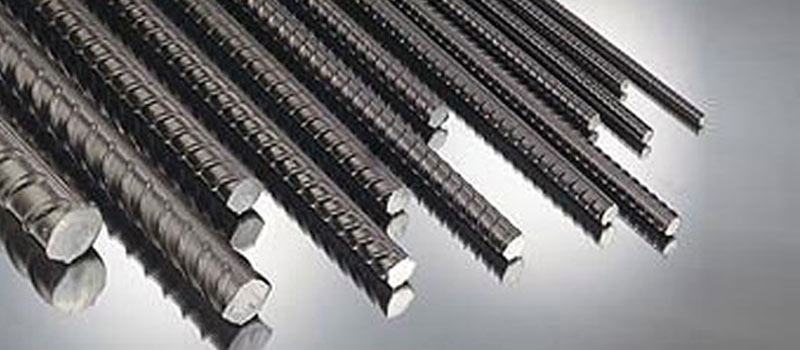
TECHNICAL DATA
The effects of increasing the Manganese (Mn) and Carbon (C) ratios in the ribbed rebar and hot and cold processes on the quality of the produced iron: The increase in the amount of carbon contained in the iron affects the durability in a good way, while it adversely affects the retention of weld and it embrittles the iron. In the rebar production standard, the carbon ratio in iron must be less than 25%. Weldability feature is significant especially in the production of prefabricated buildings. Moreover, it will crack and/or be broken in bending and torsion during the iron manufacturing stage, since the high carbon ratio will cause brittleness in the iron. Ribbed rebar flexibility is provided by using alloying elements such as Nb, Va, Vo, apart from manganese. Another way to increase the quality of rebar is to apply later cold processes to the hot rolled ribbed rebar such as twisting and drawing. In its processing, these methods, which reduce production time, increase the cost due to being an extra process. With controlled water-cooling system, the hot-rolled rebar is tempered with its internal heat by giving water shortly after production. In the controlled water-cooling method, the hot-rolled rebar enters the specially designed quenching unit immediately after leaving the bench line. In the exterior surface of the rebar which is exposed to rapid cooling in the unit, a martensite shell is formed, of which thickness varies depending on the quenching time. Martensite has a small particle structure. It is very hard but has a fragile structure. Heat treatment is required.
| Çap (mm) | mt / kg | 12 mt / kg |
| 8 mm | 0,395 | 4,750 |
| 10 mm | 0,617 | 7,404 |
| 12 mm | 0,888 | 10,657 |
| 14 mm | 1,208 | 14,496 |
| 16 mm | 1,578 | 18,936 |
| 18 mm | 1,998 | 23,976 |
| 20 mm | 2,466 | 29,592 |
| 22 mm | 2,984 | 35,808 |
| 24 mm | 3,551 | 42,612 |
| 25 mm | 3,853 | 46,236 |
| 26 mm | 4,168 | 50,016 |
| 28 mm | 4 834 | 58,008 |
| 30 mm | 5,549 | 66,588 |
| 32 mm | 6,313 | 75,756 |
| 36 mm | 7,990 | 95,880 |
| 40 mm | 9,865 | 118,380 |